Blazer vs Suit Jacket: Which Should You Choose?
A practical head-to-head comparison of Blazer and Suit Jacket, covering quick verdict, key differences, category winners, buyer fit, and FAQ.
Blazer vs Suit Jacket: Which Should You Choose?
Head-to-head comparison
Overall winner: Suit Jacket for its definitive formality and cohesive style.
While both garments add a layer of sophistication, the suit jacket excels in formal and professional environments where a polished, matching ensemble is paramount. The blazer, by contrast, offers unmatched versatility, serving as the go-to for smart-casual settings and individual expression when a full suit isn't required.
Head-to-Head Scorecard
Blazer vs Suit Jacket: Key Differences
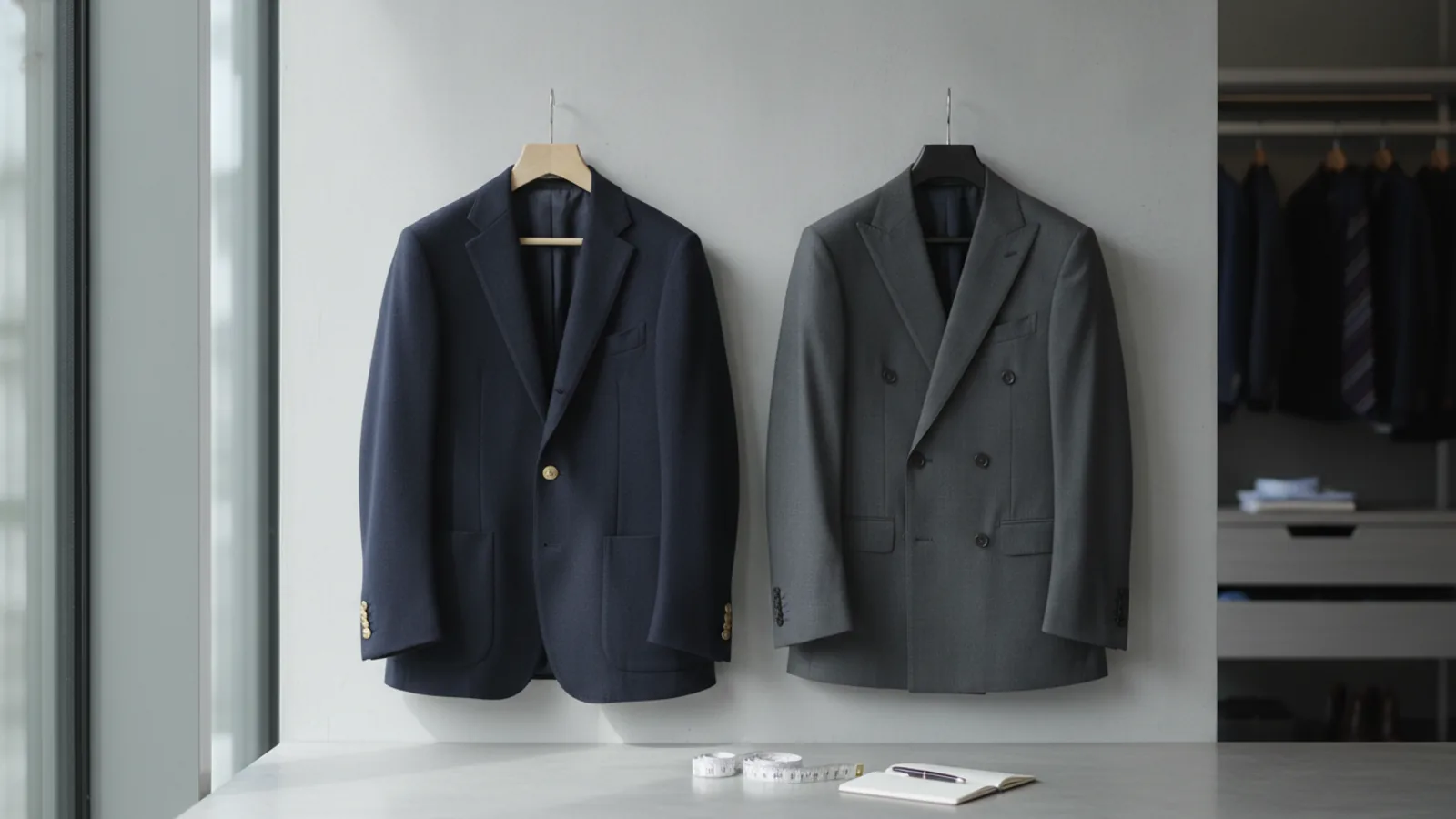
While often confused, a blazer and a suit jacket serve distinct purposes in men's and women's wardrobes. The primary difference lies in their intended use and construction. A suit jacket is inherently part of a matching two or three-piece suit, designed to be worn with trousers (and sometimes a waistcoat) made from the exact same fabric. It aims for a unified, formal look.
A blazer, on the other hand, is conceived as a standalone item. It's designed to be paired with non-matching trousers, such as chinos, jeans, or flannel trousers, and offers far greater flexibility for smart-casual and business-casual wear. Blazers often feature more distinctive details like metal buttons, patch pockets, or a slightly less structured feel, emphasising their individual character rather than being a component of a larger ensemble.
Understanding this fundamental distinction is crucial when deciding which garment best fits your needs for any given occasion in 2026. Your choice will significantly impact the overall formality and cohesiveness of your outfit.
Measurement Winners for Blazer vs Suit Jacket
Measurement
Routine Fit
The "routine fit" refers to the typical cut and tailoring expectations for each garment. A suit jacket is meticulously crafted to complement its matching trousers, usually featuring a more structured shoulder, a slightly longer length for a seamless transition over the waistcoat or shirt, and a generally sharper, more formal silhouette. Its fit is precise, aiming for a clean, unbroken line when worn as part of a complete suit.
Blazers, by contrast, can exhibit a wider range of fits. While some are sharply tailored, many blazers offer a more relaxed or even slightly shorter cut, allowing for easier movement and a less constrained feel. They are designed to be forgiving when paired with various bottoms and can sometimes accommodate a broader range of layering underneath without looking bulky. The structure often feels lighter, making them comfortable for extended casual wear.
Measurement
Formula or Feature
This criterion examines whether the garment functions best as part of a pre-defined "formula" or as an individual "feature" in an outfit. A suit jacket is the quintessential "formula" piece. Its existence is predicated on being part of a matching suit. Its cut, fabric, and details are chosen to create a harmonious whole with the accompanying trousers and, optionally, waistcoat. Deviating from this formula by wearing a suit jacket with non-matching items often looks disjointed because it lacks the design elements of a standalone jacket.
The blazer, however, is a strong "feature" piece. It's designed to stand out and elevate an outfit on its own terms. Blazers frequently incorporate distinguishing characteristics such as contrasting buttons (often brass or mother-of-pearl), patch pockets, or unique lining patterns, which underscore their individuality. They are intended to provide a focal point or a refined touch when integrated with disparate trousers, shirts, and accessories, offering a deliberate contrast rather than seeking uniformity.
Measurement
Ease of Use
Considering "ease of use" for daily styling, the blazer typically offers more flexibility. Because it's a standalone garment, a blazer can be effortlessly paired with a vast array of trousers—from tailored wool to casual denim—and various shirts, including Oxford button-downs, polo shirts, or even a fine knit. This adaptability makes it a versatile cornerstone of a smart-casual wardrobe, allowing for quick outfit assembly without much deliberation about matching fabrics or shades.
The suit jacket presents a more constrained "ease of use." Its primary purpose is to be worn with its matching trousers. While some style guides might suggest breaking up a suit for smart-casual wear, this can be challenging to execute successfully. The fabric, texture, and inherent formality of a suit jacket often make it look out of place when combined with casual trousers, creating an imbalanced aesthetic. Furthermore, repeatedly wearing only the jacket from a suit can lead to uneven wear and fading, making the full suit appear mismatched over time.
Measurement
Value as a Standalone Item
When assessing value from the perspective of a single garment, the blazer often provides superior utility. A quality blazer can be worn across numerous occasions—from business meetings to evening dinners and weekend outings—paired with multiple trousers, effectively multiplying its usage. This versatility means a single blazer can contribute to a broad range of outfits, offering a higher cost-per-wear ratio. It fills a crucial gap between casual wear and full formal attire, making it a highly practical investment for a dynamic wardrobe.
A suit jacket, while invaluable as part of a suit, has limited standalone value. Its design and fabric are intrinsically tied to the suit's complete aesthetic. Wearing it without its matching components often diminishes its impact and can make it appear as if you've forgotten part of your outfit. If purchased as part of a suit, its value is unlocked when worn as an ensemble. If you buy a suit jacket with the primary intention of wearing it separately, you're likely to find it less adaptable and potentially less flattering than a purpose-built blazer, diminishing its individual utility and perceived value.
Measurement
Buyer Confidence
Buyer confidence relates to the ease and certainty with which one can make a "correct" sartorial choice. For formal and professional settings, the suit jacket, as part of a suit, offers a clear and universally understood sartorial language. There are established rules and expectations for wearing a suit, making it a reliable choice for occasions where formality is paramount. When you choose a suit, you're embracing a well-defined dress code, which simplifies decision-making and instils confidence in your appearance for events like weddings, job interviews, or formal business meetings.
The blazer, while incredibly versatile, demands a bit more styling acumen. There are fewer strict rules, which grants freedom but also requires a better understanding of colour coordination, fabric matching, and overall aesthetic balance to pull off successfully. Knowing when a blazer is appropriate, and how to pair it without looking under-dressed or mismatched, can be a nuanced skill. This might lead to moments of uncertainty for buyers less confident in their personal styling abilities, as the responsibility for creating a cohesive look rests entirely on their individual choices rather than a predefined ensemble.
Measurement
Versatility Across Occasions
Versatility is where the blazer truly shines. Designed to be worn as a standalone piece, it effortlessly bridges the gap between casual and formal wear. A blazer can elevate a simple T-shirt and jeans for a smart-casual dinner, provide a professional edge over a button-down shirt and chinos for a business-casual office, or complete a polished look with tailored trousers for a semi-formal event. Its adaptability makes it an indispensable item for creating a wide range of outfits suitable for diverse social and professional environments without needing to change your entire ensemble.
The suit jacket's versatility is significantly more limited. Its primary function is to complete a suit, which restricts its appropriate use mostly to formal, professional, or celebratory occasions where a matching ensemble is expected. While fashion trends occasionally dabble in separating suit components, a suit jacket often looks out of place when worn with casual trousers like jeans, due to its specific cut, fabric, and inherent formality. This means you'll reach for your suit jacket far less frequently for everyday or casual outings unless you are wearing the full suit.
Measurement
Formality and Impression
When the objective is to convey maximum formality and a polished, authoritative impression, the suit jacket, as part of a complete suit, is the unequivocal choice. The matching fabric, consistent tailoring, and cohesive aesthetic of a suit signal respect for the occasion and adherence to traditional dress codes. This makes the suit jacket the gold standard for high-stakes professional meetings, job interviews, formal weddings, and other events where a sharp, unified appearance is not just preferred but often expected. It communicates seriousness, attention to detail, and sartorial precision.
The blazer, while smart and capable of elevating an outfit, occupies a distinctly less formal position. It is designed to be refined but approachable, often associated with smart-casual, business-casual, or club attire. While a well-fitted blazer can make a strong positive impression, it will generally not achieve the same level of traditional formality as a full suit. It conveys a sense of relaxed elegance or purposeful casualness, making it excellent for social events, creative workplaces, or situations where you want to look sharp without being overly stiff. The impression it creates is one of considered style rather than strict adherence to formal convention.
Choose Blazer If
- You prioritse versatility: If your wardrobe needs a jacket that can be dressed up or down with ease, pairing with chinos, jeans, or tailored trousers for various occasions.
- You frequent smart-casual or business-casual settings: For offices with a relaxed dress code, social gatherings, dinners, or weekend events where you want to look sharp without being overly formal.
- You want to build a capsule wardrobe: A good blazer is a fundamental piece that can create numerous outfits by mixing and matching with existing items.
- You appreciate distinctive styling details: Many blazers feature unique buttons (e.g., brass, mother-of-pearl), patch pockets, or bolder patterns that set them apart as standalone pieces.
- You prefer a slightly less structured feel: Blazers often have a softer shoulder or less internal canvassing, offering greater comfort and ease of movement compared to some traditional suit jackets.
- You are looking for a standalone jacket investment: If you're not planning to buy a full suit but want a refined outer layer that will see frequent use.
Choose Suit Jacket If
- You require definitive formality: For events such as weddings, formal business meetings, job interviews, funerals, or any occasion demanding a traditional, polished appearance.
- You need a cohesive, unified look: The primary purpose of a suit jacket is to form a perfectly matched ensemble with its trousers, ensuring a seamless and elegant silhouette.
- You value traditional sartorial rules: If you prefer to adhere to established dress codes where the cohesion of a suit is expected and appreciated.
- You are investing in a complete suit: When you purchase a suit, the jacket is an integral part of that investment, providing the full spectrum of its intended use.
- You want a sharp, structured silhouette: Suit jackets are typically tailored with precision, featuring structured shoulders and a more rigid construction to maintain a crisp, formal shape.
- Your professional environment demands it: For industries or roles where a full suit is the standard daily attire, ensuring you always present a professional image.
Final Verdict: Blazer vs Suit Jacket
In the perennial debate of blazer vs suit jacket, the clearer winner depends entirely on your primary needs and the occasions you anticipate. For those seeking unwavering formality, a cohesive and polished look, and adherence to traditional dress codes, the suit jacket, as an essential component of a well-tailored suit, remains the superior choice. Its inherent structure and design are optimised for conveying authority and respect.
However, for the individual prioritising versatility, ease of integration into a varied wardrobe, and a smart-casual aesthetic, the blazer stands out as the undisputed champion. Its ability to effortlessly transition between different levels of formality, paired with diverse trousers, makes it an exceptionally practical and high-value item for modern life. The key distinction lies in intention: a suit jacket completes a formal ensemble, while a blazer starts a smart outfit.
Our overall winner, the suit jacket, edges out the blazer due to its definitive role in providing an uncompromised formal statement. Yet, it's crucial to acknowledge the blazer's incredible utility and impact for those navigating the nuances of smart-casual dressing. Both garments are indispensable for a well-rounded wardrobe in 2026, serving distinct yet equally important sartorial functions.
Blazer vs Suit Jacket: Which Should You Choose? FAQ
Can I wear a suit jacket as a blazer?
Technically, you can, but it's generally not recommended and often looks suboptimal. Suit jackets are cut from specific fabrics and tailored to match their accompanying trousers, usually appearing too formal or structured when paired with casual bottoms like jeans. They also tend to be longer than most blazers. Repeatedly wearing only the jacket can cause uneven wear and fading compared to the trousers, making the full suit appear mismatched over time. For a true standalone look, a purpose-built blazer is always the better choice.
What are the defining characteristics of a blazer?
Blazers are distinguished by their standalone design, meaning they are not part of a matching suit. They often feature contrasting buttons (commonly metal, brass, or mother-of-pearl), patch pockets, or a slightly less structured shoulder. Common fabrics include serge, flannel, hopsack, or tweed. Blazers are primarily intended for smart-casual or business-casual wear and are designed for versatility, pairing well with a variety of non-matching trousers.
What are the key features of a suit jacket?
A suit jacket is always part of a matching two or three-piece suit, made from the identical fabric as its trousers and waistcoat. Its buttons are typically plastic or horn and match the fabric colour. Suit jackets usually have jetted or flap pockets and feature a more structured shoulder and a formal cut designed for a cohesive silhouette. They are intended for formal, professional, or celebratory occasions where a unified, polished look is paramount.
When is it appropriate to wear a blazer versus a suit jacket?
Wear a suit jacket when the occasion calls for traditional formality and a cohesive look, such as weddings, job interviews, formal business meetings, or black-tie optional events (as part of a full suit). Choose a blazer for smart-casual events, business-casual workplaces, dinners, social gatherings, or anytime you want to look sharp and put-together without the full formality of a suit. The blazer offers more adaptability for everyday refined style.
Are blazers more comfortable than suit jackets?
Often, yes. Blazers can be made from fabrics with more natural stretch or a looser weave, such as hopsack, and may feature a less rigid construction with softer shoulders or minimal canvassing. This contributes to a more relaxed feel and greater ease of movement. Suit jackets, particularly traditional ones, often prioritise a crisp, structured silhouette, which can feel more restrictive, especially if tailored for a very close fit.
Can women wear blazers and suit jackets?
Absolutely. The distinctions between blazers and suit jackets apply equally to women's fashion. Women's blazers are incredibly versatile, popular for both professional and casual styling, offering a chic way to elevate an outfit. Women's suit jackets are integral to power suits and other formal ensembles, providing a polished and authoritative look for business, events, and formal wear. The principles of matching versus standalone use remain consistent across gendered tailoring.