Composite Safety Boots vs Steel Toe: Which Should You Choose?
A practical head-to-head comparison of Composite Safety Boots and Steel Toe, covering quick verdict, key differences, category winners, buyer fit, and FAQ.
Composite Safety Boots vs Steel Toe: Which Should You Choose?
Head-to-head comparison
Overall winner: Composite Safety Boots for their superior comfort, versatility, and advanced protective capabilities.
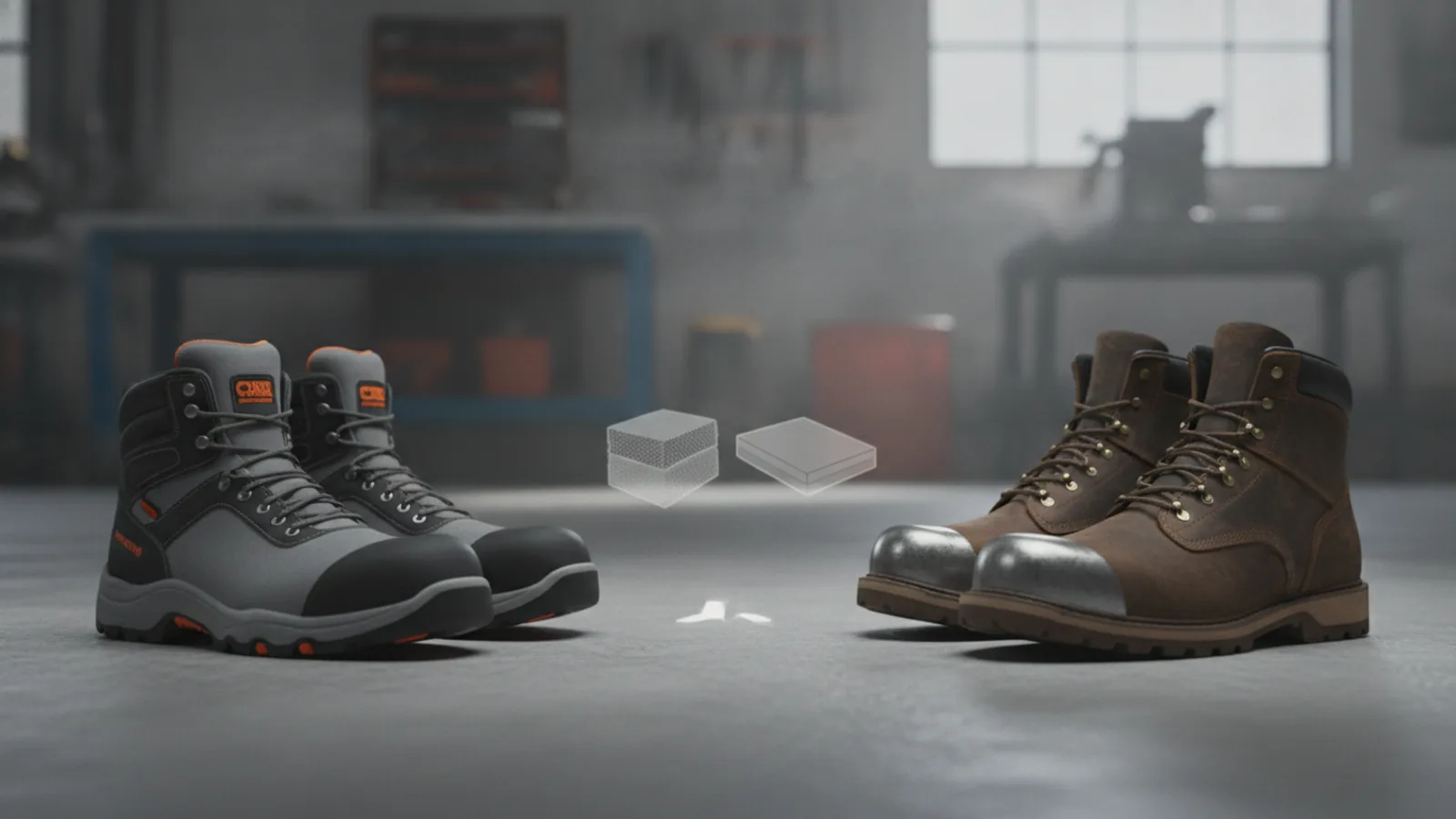
Composite safety boots represent a modern evolution in protective footwear, offering a compelling blend of lighter weight, enhanced thermal comfort, and electrical hazard safety. Steel toe boots, while traditional, remain the gold standard for unparalleled impact and crush resistance in the most demanding heavy-duty environments. Your choice depends on prioritising comfort, specific workplace hazards, or absolute maximum protection.
Head-to-Head Scorecard
Composite Safety Boots vs Steel Toe: Key Differences
The core distinction between composite safety boots and steel toe boots lies in the material used for their protective toe caps. Steel toe boots utilise a robust steel cap to shield the foot, a technology that has been a benchmark for safety for decades. Composite safety boots, on the other hand, employ non-metallic materials such as carbon fibre, plastic, or Kevlar to achieve similar, and in some cases, superior protective qualities, particularly concerning specific hazards.
While both types of boots are engineered to meet stringent safety standards, such as the EN ISO 20345 standard in the UK and Europe, the choice of material introduces significant differences in weight, thermal properties, electrical conductivity, and practicality in certain work environments. Understanding these nuances is crucial for selecting the correct footwear for your specific role and workplace conditions in 2026.
Measurement Winners for composite safety boots vs steel toe
Measurement
Routine Comfort & Weight
For individuals who spend long hours on their feet, walk frequently, or climb stairs and ladders as part of their job, the overall weight and comfort of safety footwear are paramount. Steel toe boots, by their nature, incorporate heavy steel plates in the toe cap, which contributes significantly to their overall weight. This can lead to increased fatigue in the feet and legs over a workday, potentially reducing productivity and increasing the risk of slips or falls due to tiredness.
Composite safety boots, thanks to their lighter materials, often weigh considerably less than their steel-toed counterparts. This reduction in weight can dramatically improve wearer comfort, making long shifts more manageable and reducing strain. Furthermore, composite materials tend to offer better thermal insulation, preventing the toe cap from becoming excessively cold in winter or hot in summer, which further enhances comfort.
Measurement
Maximum Impact and Crush Protection
When it comes to sheer brute force protection against falling objects or crushing hazards, steel has long been the undisputed champion. The inherent rigidity and strength of steel mean that a steel toe cap can withstand immense forces before deforming, offering an extremely high level of protection in environments where heavy machinery, falling girders, or similar severe risks are prevalent. This has been the traditional benchmark for safety in heavy industries.
Composite toe caps, while meeting the same minimum safety standards (e.g., 200 joules impact resistance as per EN ISO 20345), are designed to crush and absorb impact differently. While highly effective, some specific scenarios involving exceptionally sharp or extremely heavy falling objects might see steel retain a slight edge in ultimate non-deformable strength. However, for the vast majority of industrial and construction applications, modern composite materials offer protection that is functionally equivalent to steel under standard testing conditions, with the added benefit that if a composite cap does deform, it tends to rebound rather than permanently crimping around the foot.
Measurement
Thermal Regulation
The material properties of the toe cap directly influence how well the boot performs in varying temperatures. Steel is a highly conductive material, meaning it readily transfers heat and cold. In cold environments, a steel toe cap can quickly become frigid, chilling the wearer's toes and leading to discomfort or even cold-related injuries. Conversely, in hot conditions or when exposed to direct sunlight, a steel cap can heat up, making the boot uncomfortably warm.
Composite materials, being non-metallic, are poor conductors of temperature. This insulating property means that composite toe caps are far less susceptible to temperature extremes. They maintain a more stable internal temperature, keeping feet warmer in winter and cooler in summer. This makes composite boots a more comfortable choice for those working outdoors in the changeable British climate or in environments with significant temperature fluctuations, such as cold storage or foundries.
Measurement
Electrical Hazard (EH) Safety
For occupations that involve working near live electrical circuits, cabling, or high-voltage equipment, electrical hazard protection is a critical safety feature. Steel, being a metal, is an excellent conductor of electricity. This means that if a steel toe boot were to come into contact with an electrical source, it could potentially transmit the current through the wearer's foot, leading to serious injury or fatality.
Composite safety boots, made from non-metallic materials, are inherently non-conductive. This makes them ideal for environments where electrical hazards are present, as they provide an insulating barrier against electrical current. While no boot can offer absolute protection against all electrical risks, composite safety boots with EH ratings are designed to significantly reduce the risk of electrical shock, making them a safer choice for electricians, utility workers, and others in similar roles.
Measurement
Metal Detector and Non-Magnetic Properties
In certain industries and workplaces, such as airports, secure facilities, or some food processing plants, metal detectors are a regular feature for entry and exit. Steel toe boots, containing metallic components, will invariably trigger these detectors, requiring the wearer to remove their boots for security checks. This can be a significant inconvenience, causing delays and disrupting workflow throughout the day.
Composite safety boots, being entirely non-metallic in their protective components, will not set off metal detectors. This offers a considerable advantage in terms of convenience and efficiency for workers who frequently pass through security checkpoints. Beyond metal detectors, their non-magnetic properties also make them suitable for environments sensitive to magnetic interference, such as certain medical or scientific facilities.
Measurement
Initial Cost-Effectiveness
The upfront cost of safety footwear is often a consideration for both employers and individual buyers. Historically, and still largely true today, steel toe boots tend to be slightly more affordable to manufacture than their composite counterparts. The production of steel caps is a well-established and efficient process, which often translates to a lower retail price point for basic models of steel toe boots.
Composite materials, being more advanced and often involving more intricate manufacturing processes, can sometimes result in a higher initial purchase price for composite safety boots. While this difference might not be substantial for all models, especially as composite technology becomes more widespread, for those on a strict budget, steel toe boots often present a more accessible entry point into safety footwear. However, it's worth noting that the long-term value, factoring in comfort and specific hazard protection, might shift the balance.
Choose Composite Safety Boots If
- You prioritse comfort and reduced fatigue: The lighter weight makes a significant difference during long shifts and extensive walking.
- You work in environments with metal detectors: Avoid the inconvenience of removing your boots at security checkpoints.
- Electrical hazards are a concern: Their non-conductive properties offer crucial protection against electrical shock.
- You experience temperature extremes: Enjoy better thermal insulation, keeping your feet comfortable in both hot and cold weather.
- Your role involves light to medium-duty risks: Modern composite boots meet the same core impact and compression standards as steel.
- You need non-magnetic footwear: Essential for certain sensitive technical environments.
Choose Steel Toe If
- You face very high risks of extreme impact or crushing: For ultimate, raw strength protection against the heaviest potential falling objects.
- You operate on a strict initial budget: Steel toe boots often provide a more economical entry point into certified safety footwear.
- You prefer a traditional, often slimmer toe profile: Some wearers find the profile of steel toes to be less bulky than certain composite designs.
- You work in heavy construction, demolition, or manufacturing: Industries where the most robust physical protection is routinely required.
- You are comfortable with the added weight: If overall weight is not a primary concern for your specific job role.
Final Verdict: Composite Safety Boots vs Steel Toe
In the evolving landscape of workplace safety in 2026, composite safety boots have firmly established themselves as the leading choice for a vast majority of workers. Their advancements in material science mean they now offer comparable core protection to steel toes, while simultaneously delivering superior comfort, lighter weight, and crucial benefits like electrical hazard safety and metal detector friendliness.
However, the traditional steel toe boot should not be overlooked. For specific heavy-duty industries where the risk of extreme impact and crushing forces is paramount, or where initial budget is the overriding factor, steel toe boots continue to provide robust, reliable protection. They remain a tried-and-tested solution for the most demanding environments.
Ultimately, the "better" boot depends entirely on your specific job role, workplace hazards, and personal comfort priorities. We recommend a careful assessment of these factors to make an informed decision that ensures both your safety and well-being at work.
Composite Safety Boots vs Steel Toe: Which Should You Choose? FAQ
Are composite toes as safe as steel toes?
Yes, for all standard safety requirements, composite toes are just as safe as steel toes. Both must meet the same EN ISO 20345 impact and compression resistance standards (e.g., 200 joules impact). While steel might offer a marginal edge in extreme, brute-force crush resistance, modern composite materials provide excellent protection that is functionally equivalent for most workplace hazards.
Which is better for electricians: composite or steel toe?
Composite toe boots are significantly better for electricians. Their non-metallic construction means they are non-conductive, offering critical electrical hazard (EH) protection against electrical shock. Steel toe boots, being metallic, conduct electricity and should not be worn by electricians.
Do composite toe boots set off metal detectors?
No, composite toe boots do not set off metal detectors. They are made from non-metallic materials like carbon fibre, Kevlar, or plastic, making them ideal for environments where frequent passage through security checkpoints is required.
Are composite toe boots lighter than steel toe?
Yes, composite toe boots are generally much lighter than steel toe boots. The non-metallic materials used for the toe cap weigh less than steel, which contributes to reduced wearer fatigue and increased comfort over long work shifts.
Can I wear composite toe boots in cold weather?
Yes, composite toe boots are often preferred for cold weather. Unlike steel, which conducts cold and can make your toes feel colder, composite materials are poor thermal conductors. This insulating property helps to keep your feet warmer and more comfortable in chilly conditions.