Mid Cut vs Low Cut Hiking Boots: Which Should You Choose?
A practical head-to-head comparison of Mid Cut and Low Cut Hiking Boots, covering quick verdict, key differences, category winners, buyer fit, and FAQ.
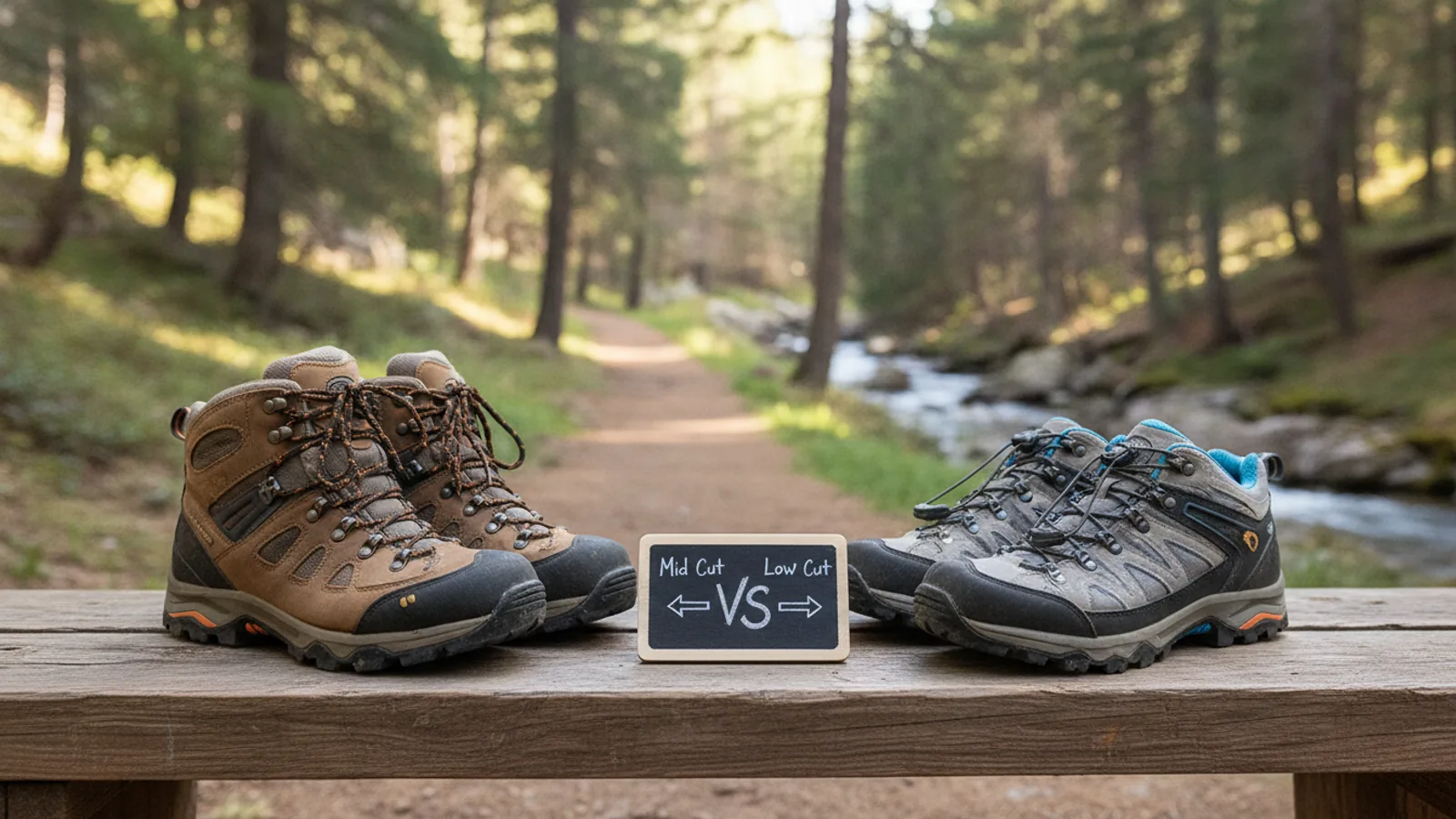
Mid Cut vs Low Cut Hiking Boots: Which Should You Choose?
Head-to-head comparison
Overall winner: Low Cut Hiking Boots for their superior versatility and comfort across a broader range of hiking conditions.
Low cut hiking boots are the go-to for most casual to moderate trails, offering lightness and breathability. Mid cut boots provide essential ankle support and protection for challenging terrain, heavy loads, or unpredictable weather.
Head-to-Head Scorecard
Mid Cut vs Low Cut Hiking Boots: Key Differences
When choosing footwear for your outdoor adventures, the primary distinction between mid cut and low cut hiking boots boils down to the height of the collar around your ankle. This seemingly simple difference has profound implications for support, protection, weight, and overall performance on the trail.
Mid cut hiking boots extend above the ankle bone, typically offering 3-4 inches of additional height compared to a low-cut design. This extra material is strategically placed to provide crucial ankle support, helping to stabilise the joint on uneven terrain and reduce the risk of sprains or twists. They often feature more robust uppers, deeper lugs on the outsole, and more extensive waterproofing to withstand harsher conditions. This design prioritises stability, protection, and durability, making them ideal for challenging hikes, multi-day treks with heavy packs, or navigating rough, unpredictable landscapes.
Conversely, low cut hiking boots are designed to sit below the ankle, much like a traditional running shoe. This design maximises flexibility, breathability, and agility. Their lighter weight and less restrictive collar allow for a greater range of motion, making them feel more natural for faster-paced activities or scrambles. While they sacrifice ankle support and some protection from debris or water, they excel in comfort for well-maintained trails, day hikes, and warmer climates where ventilation is paramount. They are often favoured by hikers who prioritise speed and a feeling of lightness on their feet.
Beyond the cut, these two categories often diverge in material choices, sole stiffness, and overall construction, all tailored to their intended use. Understanding these fundamental differences is the first step in making an informed decision about which type of hiking boot is best suited for your specific needs and the trails you plan to tackle.
Measurement Winners for mid cut vs low cut hiking boots
Measurement
Ankle Support & Stability
The level of ankle support provided is arguably the most significant differentiator between mid cut and low cut hiking boots. Mid cut boots feature a higher collar that extends up and over the ankle bone. This construction, often reinforced with stiffeners and supportive lacing systems, acts like a brace, helping to stabilise the ankle joint. For hikers navigating rocky trails, roots, side slopes, or carrying a heavy rucksack, this added support is invaluable. It helps to prevent unnatural twisting motions that can lead to sprains, particularly when fatigue sets in. The secure fit around the ankle also contributes to a more confident stride on challenging ground, reducing the effort needed to maintain balance.
In contrast, low cut hiking boots offer minimal to no ankle support. Their design prioritises freedom of movement, allowing the ankle to flex naturally. While this is excellent for agility and comfort on smoother, less technical trails, it leaves the ankle vulnerable to twists and sprains on uneven surfaces. Hikers with a history of ankle injuries or those venturing into rugged terrain without a heavy load might find this lack of support concerning. The decision here often comes down to balancing perceived risk with the desire for unhindered movement.
Measurement
Weight & Agility
Weight and agility are closely linked factors that significantly influence your experience on the trail. Generally, mid cut hiking boots are heavier than their low cut counterparts. The increased material, often more robust and with additional structural components for support, adds to their overall mass. This extra weight, while contributing to stability and protection, can lead to increased fatigue over long distances, especially on multi-day treks. The higher collar can also slightly restrict natural ankle movement, which might feel less agile for some hikers, particularly when moving quickly or scrambling over obstacles.
Low cut hiking boots, on the other hand, are inherently lighter. Their minimalist design around the ankle, coupled with often lighter-weight upper materials, reduces the overall weight on your feet. This translates directly to enhanced agility and reduced energy expenditure. Lighter footwear feels less cumbersome, allowing for a more natural stride and faster pace. The unrestricted ankle movement also means you can react more quickly to changes in terrain, making them ideal for speed hiking, trail running (if they have sufficient cushioning and grip), or simply enjoying a nimble feel on the trail. For many day hikers, the reduced weight and increased agility are significant benefits that enhance comfort and enjoyment.
Measurement
Protection from Elements & Debris
Protection is a critical aspect of hiking footwear, shielding your feet from the harsh realities of the trail. Mid cut hiking boots excel in this regard due to their extended collar and often more robust construction. The higher ankle cuff creates a natural barrier against loose rocks, sticks, and other trail debris from entering the boot. This is particularly beneficial on scree slopes, overgrown paths, or muddy trails where objects can easily flick up. Furthermore, the increased surface area of the upper typically means more material available for waterproofing. Many mid cut boots feature waterproof membranes (like Gore-Tex), which, combined with the higher cut, do an excellent job of keeping water out when traversing shallow streams, wet grass, or muddy puddles. They offer a comprehensive shield for your feet and lower ankles against the elements.
Low cut hiking boots provide less comprehensive protection. Their open design around the ankle means debris can more easily find its way into the shoe, requiring frequent stops to empty them. While many low cut models incorporate waterproof membranes, the lower cuff means they can only protect against shallow puddles or light rain. Stepping into anything deeper than a few inches will likely result in wet feet. They also offer less physical protection against scrapes and impacts from rocks or roots compared to the more substantial uppers of mid cut boots. For well-groomed trails or dry conditions, this might not be an issue, but for unpredictable environments, their protective capabilities are limited.
Measurement
Breathability & Climate Control
Foot comfort, especially in varying temperatures, is heavily influenced by how well your boots breathe. Breathability refers to a boot's ability to allow moisture vapour (sweat) to escape while preventing external water from entering. This keeps your feet dry and reduces the risk of blisters and discomfort.
Mid cut hiking boots, with their greater coverage and often more substantial materials, tend to be less breathable than low cut options. The higher collar and increased padding around the ankle, while providing support, can trap heat and moisture. While many mid cut boots incorporate breathable waterproof membranes, there's always a trade-off. In hot weather or during intense exertion, feet can feel warmer and sweatier, which might lead to discomfort and a higher chance of blisters. They are generally better suited for cooler climates or conditions where warmth retention is a benefit.
Low cut hiking boots, by design, offer superior breathability. The exposed ankle allows for excellent air circulation directly around the foot and ankle, helping to regulate temperature and evaporate sweat more efficiently. Many low cut models also utilise lighter, more porous mesh materials in their uppers, further enhancing airflow. This makes them significantly more comfortable in warm weather, on fast-paced hikes, or for individuals whose feet tend to run hot. The trade-off, of course, is that they offer less insulation in cold conditions and less protection against the entry of water from above the ankle line.
Measurement
Comfort & Flexibility
Comfort and flexibility are subjective but vital aspects that define the hiking experience. For many, a comfortable boot is one that feels natural and allows for a full range of motion without restriction. Low cut hiking boots generally win on immediate out-of-the-box comfort and flexibility. Their design, akin to a robust trainer, allows the ankle to move freely, making them feel less cumbersome and more natural for walking, especially on flat or gently rolling terrain. There's less material to break in, and the sensation is often one of lightness and freedom, which is highly desirable for casual day hikes or everyday wear. This flexibility can also be beneficial when needing to scramble or make quick, agile movements.
Mid cut hiking boots, due to their supportive structure, often require a longer break-in period. The stiffer collar and more substantial upper materials are designed for support, not immediate unhindered flexibility. While modern mid cut boots are increasingly comfortable, they will inherently feel more restrictive around the ankle compared to low cut options. For some, this restriction might initially feel less comfortable, but for others, the secure, supportive embrace is exactly what provides comfort on long, arduous treks by preventing fatigue and potential injury. The comfort here comes from stability and protection rather than outright flexibility.
Measurement
Value & Versatility
Value, beyond just the price tag, often encompasses how versatile a product is and how well it meets a broad range of needs. In terms of sheer versatility for the average outdoor enthusiast, low cut hiking boots often present a better overall value. Their lightweight and flexible design makes them suitable not just for day hikes on well-maintained trails, but also for general outdoor wear, urban exploring, travel, and even lighter trail running. They blend seamlessly into a casual wardrobe while still offering sufficient grip and protection for accessible outdoor adventures. For someone looking for a single pair of footwear to cover most of their active and casual needs, a low cut boot is a highly versatile and cost-effective choice. Many users find they get more use out of them across different contexts.
Mid cut hiking boots, while offering exceptional performance in specific, demanding scenarios, are less versatile for everyday use. Their robust nature, increased weight, and dedicated focus on stability can feel overkill for a quick walk in the park or a casual day out. While indispensable for serious trekkers and mountaineers, their niche functionality means they might not be worn as frequently for diverse activities, potentially reducing their perceived value for those with broader, less intense outdoor needs. They represent a specialised investment rather than an all-rounder.
Measurement
Durability & Lifespan
The lifespan of hiking boots is heavily influenced by the materials used and the specific design for their intended purpose. Generally, mid cut hiking boots are constructed with durability as a primary objective. They often feature more substantial full-grain leather or thicker synthetic materials for the upper, reinforced toe caps, and more robust outsoles designed to withstand constant abrasion from rocks and rough terrain. The higher collar itself, often with extra padding and reinforcement, adds to the boot's overall structural integrity and ability to endure punishment. These boots are built to take a beating on multi-day treks through challenging environments, often lasting for many seasons with proper care.
Low cut hiking boots can also be very durable, but their design prioritises lightness and flexibility, which can sometimes come at the expense of ultimate ruggedness. While premium low cut models use high-quality materials, they often feature more mesh panels for breathability and less overall material in the upper, particularly around the ankle. This can make them more susceptible to wear and tear in highly abrasive environments or with prolonged, intense use compared to a heavy-duty mid cut boot. The areas around the exposed ankle might also be less protected from scrapes. For day hikes on well-maintained paths, they offer excellent longevity, but for sustained abuse on technical trails, a mid cut boot often proves to be the more resilient choice.
Choose Mid Cut If
- You frequently tackle challenging or technical terrain: Think rocky paths, steep ascents/descents, or trails with many roots and uneven surfaces.
- You carry heavy loads: A heavy rucksack significantly shifts your centre of gravity, making ankle support crucial to prevent twists.
- You need maximum protection: If you're often in areas with sharp rocks, scree, deep mud, or potential for water crossings, the higher cuff provides a vital barrier.
- You have a history of ankle injuries: The added support can provide reassurance and reduce the risk of re-injury.
- You hike in adverse weather: Snow, deep puddles, or continuous rain are better handled by the greater coverage and often superior waterproofing of mid cut boots.
- You value stability over agility: When rock-solid footing is your top priority, especially on multi-day treks, mid cut boots deliver.
Choose Low Cut Hiking Boots If
- You primarily enjoy day hikes on well-maintained trails: For smooth, less technical paths, the benefits of lightness and flexibility shine.
- You prioritise speed and agility: If you like to move quickly, jog sections, or want an unencumbered feel on the trail, low cut boots are ideal.
- You hike in warm or hot climates: The enhanced breathability helps keep your feet cool and dry, preventing overheating and blisters.
- You want maximum flexibility and a natural stride: The unrestricted ankle movement allows for a more natural gait and feels less cumbersome.
- You carry light loads or no pack: Without a heavy pack, the need for extensive ankle support diminishes.
- You seek versatility for everyday wear: Low cut hiking boots transition easily from trail to town, making them a more multi-purpose investment.
- You prefer a shoe-like feel: If you're accustomed to athletic shoes, low cut hiking boots offer a familiar level of comfort and freedom.
Final Verdict: Mid Cut vs Low Cut Hiking Boots
The choice between mid cut and low cut hiking boots ultimately depends on your specific hiking style, the types of trails you frequent, and your personal priorities for comfort and safety. There isn't a universally "better" option; rather, it's about finding the best fit for your individual needs. Our comparison, based on extensive product research, official information, and analysis of public feedback patterns, highlights the strengths of each.
Low cut hiking boots emerge as the overall winner for the average Poppysparkles reader. Their unparalleled versatility, lighter weight, and superior breathability make them an excellent choice for the majority of day hikers and those who stick to less technical terrain. They offer comfort and agility that many find more appealing for everyday adventures and faster-paced excursions.
However, this recommendation comes with a crucial caveat. If your hiking adventures regularly involve rugged, technical trails, carrying heavy packs for multi-day treks, or battling unpredictable and harsh weather conditions, then mid cut hiking boots are the undeniable champions for their superior ankle support, protection, and enhanced durability. They are a specialised tool for demanding jobs, providing confidence and security where low cut options might fall short.
Consider your most common hiking scenarios. If you're a fair-weather day hiker on established paths, go low. If you're an ambitious trekker who relishes challenging terrain and multi-day expeditions, invest in a robust mid cut pair. For some, owning both styles provides the ultimate flexibility to tackle any trail the world throws your way.
Mid Cut vs Low Cut Hiking Boots: Which Should You Choose? FAQ
Do low cut hiking boots provide any ankle support?
Low cut hiking boots offer minimal to no dedicated ankle support. Their design prioritises flexibility and freedom of movement, similar to a robust trainer. While they might have a slightly stiffer sole and more aggressive tread than a typical running shoe, they do not offer the same level of ankle stabilisation as mid cut boots.
Are mid cut boots too heavy for day hikes?
For some, mid cut boots might feel unnecessarily heavy and restrictive for short, easy day hikes on well-maintained trails. While they offer excellent support, this can come at the cost of agility and breathability. For long distances or in warm weather on gentle terrain, their weight could lead to increased fatigue. However, for a day hike on rougher ground, the support can still be beneficial.
Can I use low cut hiking boots for backpacking?
You can use low cut hiking boots for lightweight backpacking if the terrain is not overly challenging and you are carrying a very light pack. However, for traditional backpacking with a heavy pack, especially over uneven or technical ground, the lack of ankle support from low cut boots significantly increases the risk of twists and sprains. Mid cut boots are generally recommended for backpacking due to their superior stability and protection.
What about mid cut boots in hot weather?
Mid cut boots can feel warmer than low cut boots in hot weather due to their greater coverage and often more substantial materials. While many include breathable waterproof membranes, the overall design can trap more heat. For sustained hiking in very warm conditions, low cut boots or ventilated trail shoes typically offer superior comfort and breathability.
Is one type more durable than the other?
Generally, mid cut hiking boots tend to be more durable in terms of resisting wear and tear from rough terrain and prolonged use, thanks to their more extensive, robust materials and reinforcements. However, the lifespan of any boot depends on its construction quality, materials, and how it's used and cared for. High-quality low cut boots can also be very durable for their intended use.
Should beginners choose mid cut or low cut?
For beginners starting with easy-to-moderate trails, low cut hiking boots are often a great starting point due to their comfort, versatility, and ease of use. If a beginner plans to immediately tackle more challenging or multi-day hikes, or has concerns about ankle stability, a mid cut boot would be a more prudent choice for safety and confidence.