Platinum vs White Gold: Which Should You Choose?
A practical head-to-head comparison of Platinum and White Gold, covering quick verdict, key differences, category winners, buyer fit, and FAQ.
Platinum vs White Gold: Which Should You Choose?
Head-to-head comparison
Overall winner: Platinum for its superior durability, hypoallergenic properties, and enduring natural lustre.
For those prioritising a lifelong, low-maintenance piece of jewellery with natural strength and a unique patina, platinum is the definitive choice. White gold, however, presents a more accessible initial investment, offering a brilliant white finish through rhodium plating, suitable for buyers willing to undertake periodic re-plating.
Head-to-Head Scorecard
Deciding between platinum and white gold is a common dilemma when purchasing engagement rings, wedding bands, or any significant piece of fine jewellery. Both metals offer a similar aesthetic of a bright, silvery-white appearance, yet their underlying compositions, properties, and long-term care requirements differ significantly. This comparison for 2026 delves into these distinctions, providing clear, practical guidance to help you choose the metal that best aligns with your priorities, budget, and lifestyle.
Our analysis is based on extensive product research, official material specifications, observed public buyer feedback patterns, and expert editorial analysis of precious metals. We aim to provide evidence-led recommendations without inventing specific product claims or pricing.
Platinum vs White Gold: Key Differences
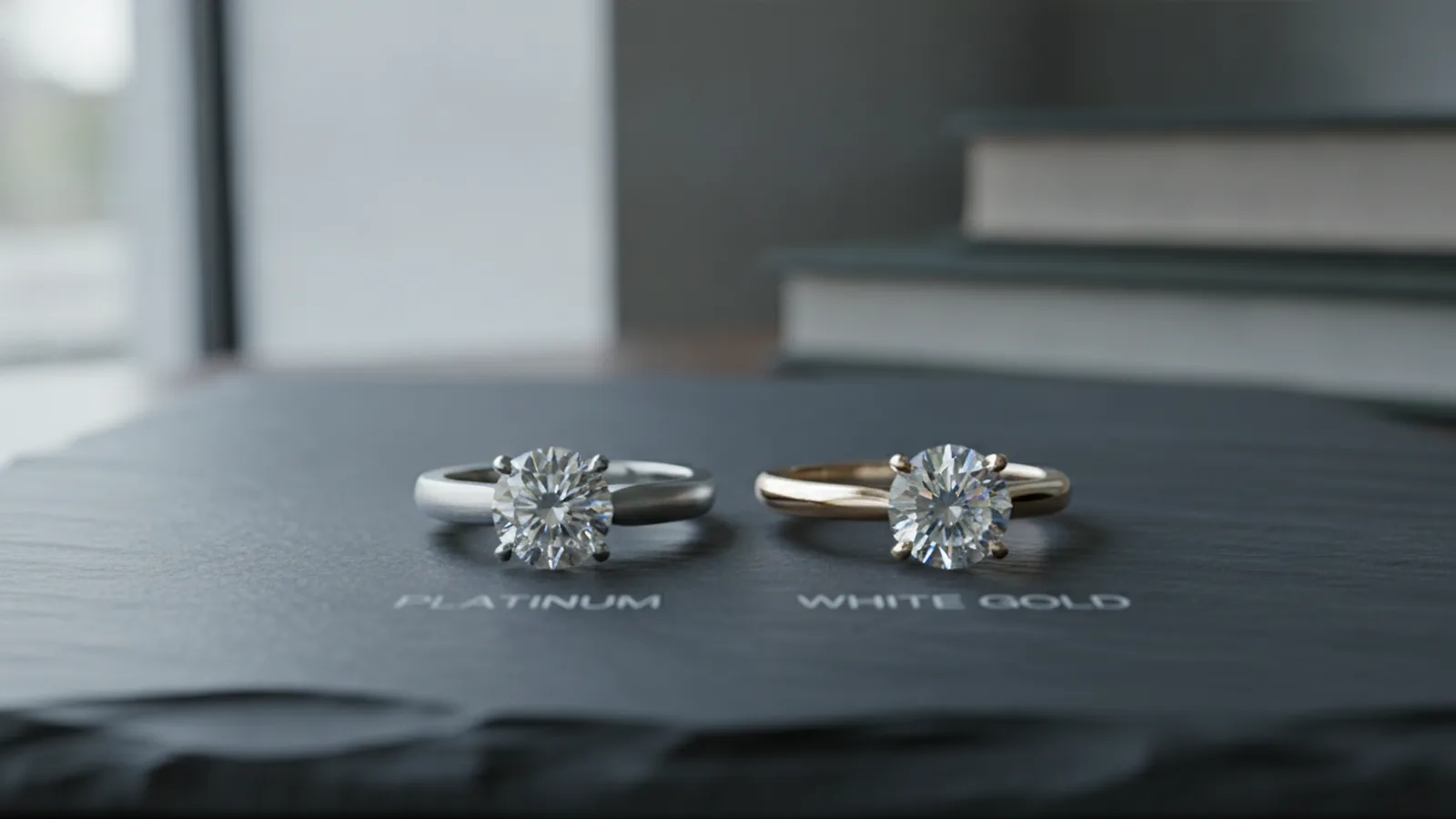
While platinum and white gold share a superficial resemblance, they are fundamentally different materials. Platinum is a naturally white, noble metal, celebrated for its purity, density, and exceptional durability. It is hypoallergenic and does not tarnish, making it a robust choice for daily wear.
White gold, conversely, is an alloy created by mixing yellow gold with other white metals, such as palladium, silver, or nickel. To achieve its signature bright white finish, white gold jewellery is typically plated with a thin layer of rhodium, a member of the platinum family. This plating provides the desired aesthetic but requires periodic re-application over time as it wears off, revealing the slightly yellowish hue of the underlying white gold alloy.
These core differences lead to varying experiences in terms of cost, maintenance, longevity, and even the tactile feel of the jewellery. Understanding these nuances is crucial for making an informed decision that you'll be happy with for years to come.
Measurement Winners for platinum vs white gold
Measurement
Cost & Initial Investment
When considering the upfront cost, white gold generally presents a more budget-friendly option than platinum. This is primarily due to several factors: platinum is a rarer metal than gold, its density means more material is required for the same volume (making it heavier), and its purity (typically 95% for jewellery) is higher than that of white gold alloys (which are commonly 14K or 18K, meaning 58.3% or 75% pure gold respectively). The process of working with platinum is also more intricate and labour-intensive for jewellers, further contributing to its higher price point.
For individuals working with a strict budget, white gold allows for more flexibility, potentially freeing up funds for a larger diamond or more intricate design. However, it's important to consider the long-term cost implications, particularly the need for periodic rhodium re-plating with white gold, which adds to the lifetime expense. While platinum's initial investment is higher, its low maintenance requirements can offset some of that cost over decades of wear, making the "value winner" complex depending on one's definition of value.
Measurement
Durability & Wear
Platinum stands out for its exceptional durability and resistance to wear, making it a superior choice for pieces intended for daily, lifelong use. Platinum is a very dense and strong metal. When it scratches, the metal is displaced rather than lost. This means that while platinum jewellery can develop a natural "patina" – a soft, satiny finish – from surface scratches over time, the volume of the metal remains intact. This displaced metal can often be polished back to its original lustre by a jeweller without significant material loss. This property is particularly beneficial for prong settings, as platinum prongs are less likely to wear down or break, providing a more secure hold for precious gemstones.
White gold, conversely, is harder than platinum due to the alloying process, but it is also more brittle. While it may initially resist minor scratches more effectively than platinum, scratches on white gold result in actual material loss. Over time, white gold can show signs of wear, potentially thinning out or losing metal from prongs. Furthermore, the rhodium plating on white gold will inevitably wear off with daily friction, especially on areas exposed to frequent contact like the underside of a ring band or the tips of prongs. This exposes the slightly yellowish base metal, necessitating re-plating to restore its bright white appearance.
Measurement
Maintenance & Care
The maintenance requirements for platinum and white gold differ significantly, primarily due to white gold's reliance on rhodium plating. Platinum requires minimal special care beyond routine cleaning to remove dirt and oils. As a naturally white metal, it never needs re-plating to maintain its colour. While it develops a patina over time, many owners appreciate this unique character; those who prefer a high-shine finish can have their platinum jewellery polished by a jeweller to restore its original brilliance. This polishing process, however, does not involve material loss as it would with gold.
White gold, on the other hand, necessitates regular professional maintenance. The rhodium plating that gives white gold its bright, silvery-white finish is very thin and will wear away with daily use. The rate of wear depends on the wearer's habits and the frequency of contact, but typically, white gold jewellery will require re-plating every 12 to 24 months to restore its colour and lustre. This re-plating incurs an additional cost each time and means the jewellery will be unavailable for a period while at the jeweller. For some, this ongoing maintenance is a minor inconvenience, but for others, the continuous upkeep and associated costs can be a significant drawback.
Measurement
Appearance & Colour
At first glance, new platinum and newly rhodium-plated white gold can appear almost identical, both boasting a brilliant, reflective white finish. However, their long-term colour evolution and underlying hues are distinct. Platinum is a naturally white metal, meaning its colour comes from its inherent properties and requires no plating. Over time, platinum develops a characteristic "patina" – a subtle, satiny sheen that many find appealing. This patina is not a sign of wear or discolouration but rather a unique characteristic that reflects its durability and the redistribution of metal on its surface. For those who prefer a high-polish look, platinum can be re-polished by a professional jeweller.
White gold, being an alloy of yellow gold, has a natural yellowish tint beneath its rhodium plating. When the rhodium layer wears thin, this underlying yellow hue begins to show through, particularly on edges, high-contact areas, and prong tips. This is why white gold requires regular re-plating to maintain its bright white lustre. The intensity of the yellowish tint in the base alloy can vary depending on the specific metals used in the alloy, but it is always present to some degree. For wearers who desire a consistently brilliant, icy-white finish without any hint of warmth, white gold demands vigilant re-plating.
Measurement
Hypoallergenic Properties
For individuals with sensitive skin or metal allergies, the hypoallergenic properties of a metal are a critical consideration. Platinum is naturally hypoallergenic, meaning it very rarely causes allergic reactions. It is typically used in a highly pure form for jewellery (e.g., 95% pure), and the other 5% usually consists of inert metals from the platinum group, such as ruthenium or iridium. This high purity and lack of common allergens make platinum an excellent choice for anyone concerned about skin irritation or contact dermatitis.
White gold, on the other hand, is an alloy, and its composition can vary. Historically, nickel was a common alloying metal used to create white gold, and nickel is a frequent cause of allergic reactions. While many manufacturers in the GB market and beyond now use nickel-free white gold alloys (often using palladium), it is still essential to verify the exact composition if you have sensitivities. Even with palladium white gold, some individuals may still experience mild reactions, though it is far less common than with nickel. The rhodium plating on white gold is generally hypoallergenic, but if it wears off, the underlying alloy is exposed, which could then trigger a reaction if it contains an allergen. Therefore, for ultimate peace of mind regarding allergies, platinum is the safer bet.
Measurement
Weight & Feel
The tactile experience of wearing jewellery can also influence your preference, and here, platinum and white gold offer distinct sensations due to their differing densities. Platinum is a significantly denser metal than gold. This means that a piece of platinum jewellery will feel noticeably heavier in your hand and on your finger compared to an identically sized piece of white gold. For many, this weight conveys a sense of luxury, substance, and security, enhancing the perceived value and quality of the item. This substantial feel can be particularly appealing for items like engagement rings and wedding bands, which are meant to be worn daily for a lifetime.
White gold, while still a precious metal, is lighter than platinum. This difference in weight might be preferred by individuals who are accustomed to lighter jewellery or those who find heavier items uncomfortable for prolonged wear. For some, the lighter weight of white gold can feel less intrusive, especially on smaller fingers or for larger, more elaborate designs where excessive weight might become cumbersome. Ultimately, the preference for a heavier or lighter feel is subjective, but it is a distinct characteristic that can factor into the decision-making process.
Measurement
Value Retention & Resale
When considering long-term value and potential resale, both platinum and gold are precious metals with inherent worth. However, their market dynamics and value retention can differ. Platinum, due to its rarity and high purity in jewellery (typically 95%), tends to retain a strong intrinsic value. While the market price for platinum can fluctuate, its high purity means that a significant portion of the jewellery's value is tied directly to the metal itself. Furthermore, as discussed, platinum resists material loss from wear, meaning the actual amount of precious metal in your piece remains largely consistent over time, which can be advantageous for resale.
White gold, conversely, typically comes in 14K or 18K purity, meaning it contains a higher percentage of non-gold alloys (25% to 41.7%). While gold is generally a more liquid asset with a broader market, the lower purity of white gold alloys means that a greater proportion of the piece's weight is composed of less valuable metals. The rhodium plating also does not add significant resale value as it is a surface treatment. When reselling white gold, its value will primarily be assessed based on its gold content and any gemstones present. The cost of re-plating, while part of the ownership experience, does not translate to increased resale value. For those prioritising the intrinsic value of the metal content and long-term material integrity, platinum often holds an edge.
Choose Platinum If
- You have sensitive skin or metal allergies: Platinum is naturally hypoallergenic and ideal for those prone to reactions from other metals.
- You want minimal maintenance: Platinum never needs re-plating, offering a fuss-free experience. A quick polish will restore its shine, or you can embrace its unique patina.
- You value extreme durability and longevity: Platinum is incredibly strong and resistant to material loss. It provides a highly secure setting for gemstones, making it excellent for engagement rings and other cherished pieces.
- You prefer a substantial feel: Its higher density means platinum jewellery feels heavier and more luxurious on the finger.
- You appreciate a unique aesthetic: The natural patina that develops on platinum is a distinctive characteristic that many find beautiful and symbolic of its endurance.
- You are making a lifelong investment: While the initial cost is higher, platinum's resilience and low maintenance can offer better long-term value and peace of mind.
Choose White Gold If
- You have a tighter budget: White gold is generally more affordable than platinum, allowing you to allocate more of your budget to the gemstone or design.
- You prefer a consistently brilliant, icy-white shine: With regular rhodium re-plating, white gold maintains a very bright, reflective finish that some find more appealing than platinum's natural lustre and patina.
- You don't mind periodic maintenance: You are comfortable with the commitment of taking your jewellery for professional re-plating every 1-2 years to maintain its white appearance.
- You prefer a lighter feel: White gold is less dense than platinum, resulting in a lighter piece of jewellery that some wearers find more comfortable.
- You desire a wide range of designs: White gold is a very popular choice, and jewellers often offer an extensive array of designs in this metal.
Final Verdict: Platinum vs White Gold
The choice between platinum and white gold ultimately comes down to a balance of budget, priorities, and long-term expectations. If you are seeking a jewellery piece that embodies enduring strength, requires minimal maintenance, offers hypoallergenic peace of mind, and boasts a unique, evolving natural beauty, platinum is the superior choice. Its higher initial investment is offset by its resilience, purity, and freedom from ongoing re-plating costs.
However, if your primary concern is initial affordability and you are drawn to a consistently brilliant, mirror-like white finish, white gold presents an excellent alternative. Be prepared for the commitment of periodic rhodium re-plating to maintain its pristine appearance. Both metals offer a stunning white aesthetic, but platinum's natural properties provide a more robust and lower-maintenance experience over a lifetime of wear. Consider what truly matters to you – initial cost versus long-term durability and care – to make the best decision for your cherished jewellery.
Platinum vs White Gold: Which Should You Choose? FAQ
Is platinum or white gold more expensive?
Platinum is generally more expensive than white gold. This is due to its rarity, higher density (meaning more material per piece), and its higher purity (typically 95% for jewellery compared to 58.3% or 75% for 14K or 18K white gold). The manufacturing process for platinum is also more demanding for jewellers, contributing to its higher price point.
Which metal is more durable, platinum or white gold?
Platinum is considered more durable in terms of material retention. When platinum scratches, the metal is displaced, creating a patina but not losing material. White gold, being harder but more brittle, loses actual material when scratched. Additionally, white gold's rhodium plating wears off, requiring re-plating, whereas platinum is naturally white and doesn't need this upkeep.
Does white gold turn yellow over time?
Yes, white gold can appear to turn yellow over time. This is because white gold is an alloy of yellow gold and other white metals, then plated with rhodium to achieve its bright white finish. As the thin rhodium plating wears off with daily wear, the natural yellowish tint of the underlying white gold alloy becomes visible, necessitating periodic re-plating.
Is platinum better for sensitive skin?
Yes, platinum is generally better for sensitive skin. It is a naturally hypoallergenic metal, typically used in 95% purity for jewellery, with the remaining 5% usually being other inert platinum group metals. White gold alloys, especially older ones, often contain nickel, which is a common allergen, though many modern white gold alloys are nickel-free.
How often does white gold need to be re-plated?
The frequency of re-plating for white gold depends on how often the jewellery is worn and the wearer's daily activities. On average, most white gold rings and frequently worn pieces require re-plating every 1 to 2 years to maintain their bright white appearance. Less frequently worn items might go longer.