Polarized Sunglasses vs Non Polarized Sunglasses: Which Should You Choose?
A practical head-to-head comparison of Polarized Sunglasses and Non Polarized Sunglasses, covering quick verdict, key differences, category winners, buyer fit, and FAQ.
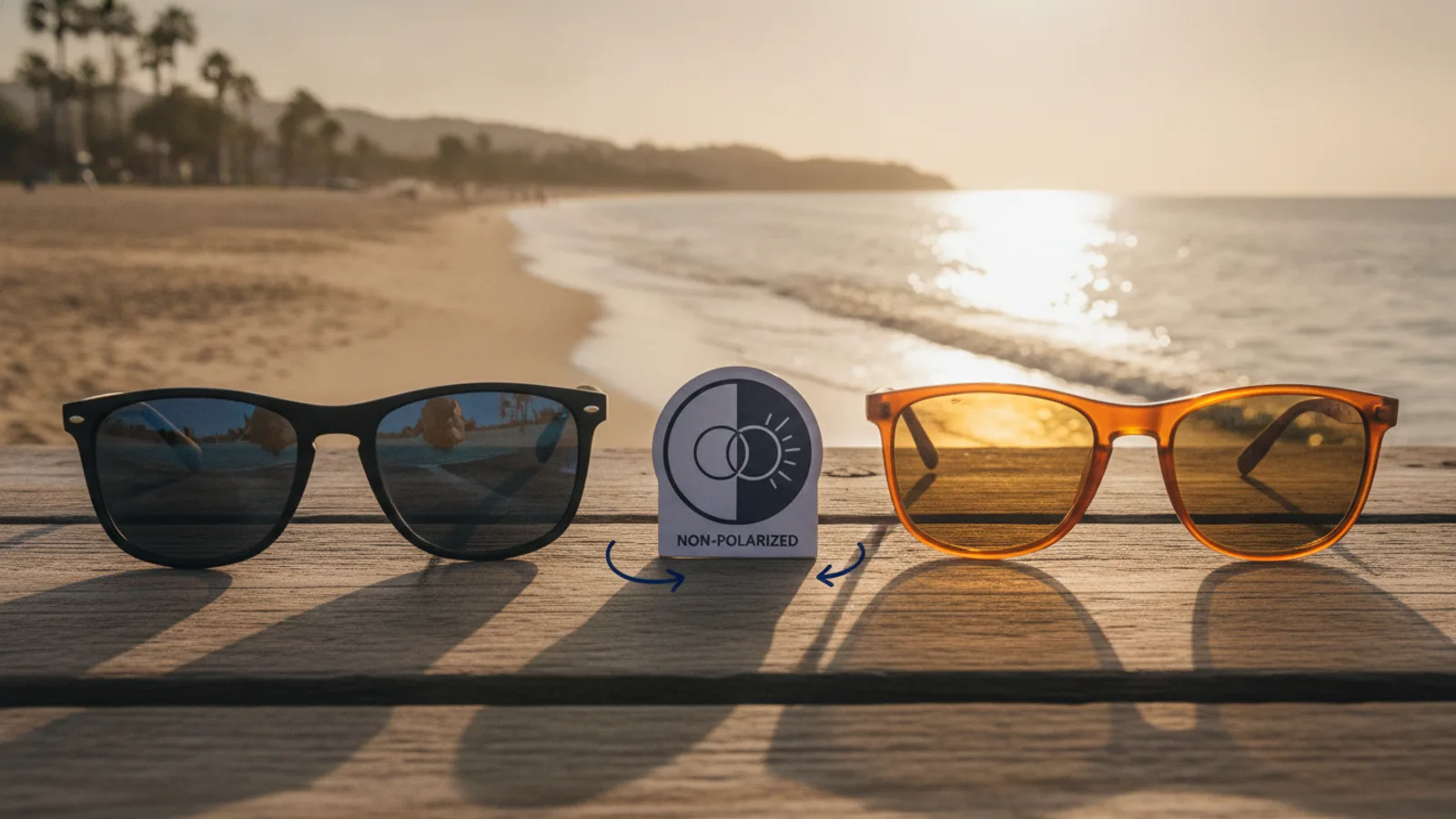
Polarized Sunglasses vs Non Polarized Sunglasses: Which Should You Choose?
Head-to-head comparison
Overall winner: Polarized Sunglasses for superior glare reduction in most common scenarios.
Polarized sunglasses are the clear choice for anyone looking to minimise glare from reflective surfaces like water, snow, and roads, offering enhanced visual clarity and reduced eye strain. However, non-polarized options remain essential for specific professional uses, particularly involving digital screens or critical visual cues.
Head-to-Head Scorecard
Polarized Sunglasses vs Non Polarized Sunglasses: Key Differences
When you're choosing sunglasses, the primary distinction between polarized and non-polarized lenses lies in their ability to handle glare. This isn't just about dimming bright light; it's about how they filter specific types of light waves to deliver a clearer, more comfortable visual experience.
Non-polarized lenses act like a simple filter, uniformly reducing the intensity of light that passes through them. Think of them as a dimmer switch for your eyes. They make everything darker, which helps in bright conditions, but they don't specifically target the harsh, reflective glare that bounces off surfaces like water, snow, or the bonnet of a car. While they offer crucial UV protection (assuming they are rated for it), their benefit is largely limited to reducing overall brightness.
Polarized lenses, on the other hand, incorporate a special chemical filter that selectively blocks horizontal light waves. Sunlight travels in all directions, but when it hits a flat surface (like a road or water), it becomes concentrated and bounces off horizontally, creating intense, blinding glare. This horizontal glare is what polarized lenses are designed to eliminate. By blocking these specific light waves, polarized sunglasses dramatically reduce glare, leading to enhanced contrast, truer colour perception, and significantly less eye strain, especially in highly reflective environments. This isn't just about comfort; it can also be a matter of safety, particularly when driving or participating in water sports.
The core difference, then, is active glare management versus passive light reduction. This distinction informs virtually every aspect of their performance, from how they perform on a sunny drive to their compatibility with modern technology.
Measurement Winners for polarized sunglasses vs non polarized sunglasses
Measurement
Glare Reduction & Visual Comfort
The ability to reduce glare is the defining characteristic that sets polarized sunglasses apart. Glare occurs when light reflects off flat surfaces, creating an intense, often blinding brightness that obscures vision and causes significant eye strain. This phenomenon is particularly prevalent around water, snow, wet roads, and even large glass buildings.
Non-polarized lenses do reduce the overall amount of light reaching your eyes, which offers a certain degree of relief in bright conditions. However, they do not specifically filter out the horizontal light waves responsible for glare. This means that while the scene might appear dimmer, the harsh reflections can still be quite prominent, leading to squinting, fatigue, and reduced visibility of details.
Polarized lenses are engineered with a microscopic filter that blocks these horizontal light waves. By eliminating this specific type of glare, they provide a much clearer and sharper view, enhancing contrast and allowing you to see objects beneath the surface of water or through shimmering reflections on the road. This active glare cancellation significantly boosts visual comfort, reducing the need to squint and enabling prolonged outdoor activities without discomfort. For most users, this makes a noticeable, immediate difference in their visual experience in sunny conditions.
Measurement
Compatibility with Digital Screens & Instrumentation
In our increasingly digital world, the interaction between sunglasses and electronic displays is a crucial factor. This is where the unique filtering mechanism of polarized lenses can become a drawback.
Many modern digital screens, including those found in car dashboards, smartphones, tablets, GPS devices, and ATMs, emit light in a specific polarized pattern. When you view these screens through polarized sunglasses, the lens's filter can block or distort the light from the screen, making it appear dim, discoloured, or even completely black. This is because the polarized lens is effectively cancelling out the polarized light emitted by the screen. The effect can vary depending on the angle at which you view the screen, sometimes appearing as a rainbow effect or simply an inability to read the display.
Non-polarized sunglasses, lacking this specific filtering layer, allow all light waves to pass through uniformly. This means they do not interfere with the light emitted by digital screens or LCD panels. For professions such as pilots, who rely heavily on cockpit instrumentation, or heavy machinery operators using digital controls, this compatibility is not just a convenience but a critical safety requirement. Similarly, for everyday users who frequently check their phone or rely on their car's navigation system, non-polarized lenses offer an uninterrupted viewing experience.
Measurement
Cost & Value Proposition
Price often plays a significant role in purchasing decisions, and there's a general trend when comparing polarized vs. non-polarized options. The manufacturing process for polarized lenses is typically more complex, involving the embedding of a specialized chemical film within the lens or between layers of material. This added technological component usually translates into a higher production cost.
As a result, polarized sunglasses often come with a higher price tag compared to non-polarized equivalents from the same brand or with similar frame quality. While there are budget-friendly polarized options available, premium polarized sunglasses will almost always be more expensive than premium non-polarized ones.
The value proposition, however, depends entirely on individual needs. If you frequently encounter situations with intense glare – like driving on motorways, spending time on the water, or skiing – the investment in polarized lenses can be well worth it. The enhanced visual comfort, reduced eye strain, and improved clarity offer significant benefits that many consider to justify the extra cost. For those whose primary need is simple brightness reduction or who require screen compatibility, the additional cost of polarization might not offer commensurate value. In such cases, non-polarized sunglasses provide a perfectly adequate and more cost-effective solution.
Measurement
UV Protection & Eye Health
When discussing eye health, it's crucial to understand that UV protection is independent of polarization. Both polarized and non-polarized sunglasses can and should offer 100% protection against harmful UVA and UVB rays. The presence or absence of a polarizing filter does not inherently determine the level of UV defence.
High-quality sunglasses, regardless of their polarization status, are designed with lens materials or coatings that block ultraviolet radiation. In the UK, sunglasses must carry a CE mark (or UKCA mark) and meet the BS EN ISO 12312-1:2013 standard, indicating they offer a safe level of UV protection. Look for labels that explicitly state "UV400" or "100% UV protection" to ensure your eyes are adequately shielded from the sun's damaging rays.
Exposure to UV radiation can contribute to a range of eye conditions, including cataracts, macular degeneration, and photokeratitis (sunburn of the eye). Therefore, choosing sunglasses with robust UV protection is paramount for long-term eye health, irrespective of whether you opt for polarized or non-polarized lenses. It's a fundamental feature that should be prioritised above all else when selecting any pair of sunglasses.
Measurement
Environmental Versatility & General Use
The choice between polarized and non-polarized sunglasses often comes down to the primary environments and activities for which they will be used. This determines which type offers the most beneficial experience for general, day-to-day wear.
For most people, routine use involves situations where glare is a common nuisance. Driving on sunny days, spending time at the beach or park, walking around town, or participating in casual outdoor activities all frequently expose us to reflections from roads, car bonnets, shop windows, and water surfaces. In these scenarios, the glare-eliminating properties of polarized lenses offer a distinct advantage. They provide a more comfortable and visually clearer experience, reducing eye strain and enhancing the overall enjoyment of the outdoors.
Non-polarized sunglasses are versatile in their own right, especially where screen compatibility is a factor, as discussed. However, if your typical usage doesn't specifically require uninhibited screen viewing and you are frequently bothered by reflections, non-polarized lenses will offer less relief. They will dim the light, but the sharp, bright spots of glare will remain. For the majority of users seeking enhanced visual comfort across a wide range of common outdoor settings, the benefits of polarization make them generally more versatile and effective.
Measurement
Driving & Road Safety
Driving conditions often present a complex interplay of light and reflections, making the choice of sunglasses crucial for safety and comfort. Glare from wet roads, the car in front, or even the dashboard can be intense and momentarily blinding, posing a significant hazard.
Polarized lenses excel in reducing this specific type of glare. By filtering out horizontal reflections, they can dramatically improve visibility on the road. You'll find it easier to see other vehicles, road markings, and potential hazards, especially when the sun is low or the road is wet. This reduced glare also contributes to less eye fatigue on long journeys, allowing for greater concentration and comfort.
However, it's important to consider modern vehicle technology. As previously noted, some car dashboards feature LCD or LED displays that can appear distorted or blacked out when viewed through polarized lenses. This can be problematic for reading speedometers, navigation screens, or infotainment systems. Some drivers find this interference frustrating, while others report no significant issues, depending on the angle of their view and the specific car model.
Non-polarized sunglasses, while not reducing glare, will not interfere with any in-car displays. They simply darken the overall view. For drivers who prioritise an uninterrupted view of all dashboard elements and find the interference with polarized lenses too disruptive, non-polarized options might be preferred, despite the trade-off in glare reduction. However, for most, the safety benefits of glare reduction tend to outweigh the potential minor screen issues.
Choose Polarized Sunglasses If
- You frequently drive in sunny conditions: Polarized lenses significantly reduce glare from roads, car bonnets, and windscreens, improving visibility and reducing eye fatigue.
- You enjoy water sports or activities: Anglers, boaters, and paddleboarders will find polarized lenses invaluable for cutting through the glare on the water's surface, allowing them to see beneath more clearly and reducing eye strain.
- You participate in snow sports: Skiers and snowboarders benefit immensely from polarized lenses, which eliminate glare from snow and ice, improving contrast and depth perception on the slopes.
- You are highly sensitive to bright light and glare: If you find yourself squinting excessively or experiencing significant discomfort from reflections, polarized lenses will offer a much more comfortable visual experience.
- You want enhanced visual clarity and contrast outdoors: Beyond just glare reduction, polarized lenses can make colours appear more vivid and improve the definition of objects in bright environments.
- Your primary concern is general outdoor comfort: For everyday activities like walking, hiking, or simply relaxing outside, polarized sunglasses provide a more pleasant and less tiring view.
Choose Non Polarized Sunglasses If
- You are a pilot or operate heavy machinery: Many cockpits and industrial control panels use LCD screens that can appear black or distorted through polarized lenses. Non-polarized sunglasses ensure a clear, unobstructed view of vital instrumentation.
- You frequently look at digital screens in your car or outdoors: If you rely on your car's navigation system, smartphone, or other digital displays while wearing sunglasses, non-polarized lenses will prevent any visual interference.
- You need to spot oil slicks or ice patches on roads: While polarized lenses reduce general glare, they can sometimes make it harder to distinguish specific visual anomalies like oil slicks or black ice, which can be critical for safety in certain professions or situations.
- You are working on a budget: Non-polarized sunglasses generally offer a more affordable entry point for basic sun protection, providing good value if glare reduction isn't your top priority.
- Your primary need is simply to reduce overall brightness: If you just want to dim the world and protect your eyes from UV rays without the specific glare-filtering properties, non-polarized lenses are perfectly adequate.
- You want consistent, unaltered colour perception across all light sources: In specific niche scenarios, some users prefer the natural, unfiltered light transmission of non-polarized lenses.
Final Verdict: Polarized Sunglasses vs Non Polarized Sunglasses
In the head-to-head comparison of polarized sunglasses vs non polarized sunglasses in 2026, **Polarized Sunglasses emerge as the overall winner for the vast majority of consumers.** Their unparalleled ability to cut glare from reflective surfaces like water, snow, and roads offers significant benefits in terms of visual comfort, clarity, and even safety during common activities such as driving, water sports, and general outdoor pursuits.
However, the verdict is not absolute. Non-polarized sunglasses retain a crucial role, particularly for specialist users. Professionals such as pilots and heavy machinery operators, for whom an uninterrupted view of digital screens and critical visual cues is paramount, will find non-polarized lenses to be the only viable and safe option. They also represent a more cost-effective choice for those whose primary need is simple brightness reduction and UV protection without the added expense of polarization.
Ultimately, the best choice depends on your individual lifestyle, common activities, and specific needs. If you regularly encounter glare and value enhanced visual clarity and reduced eye strain, polarized sunglasses are a worthwhile investment. If your daily routine involves frequent interaction with digital displays or a profession where filtered light could be detrimental, non-polarized sunglasses are the sensible and necessary choice.
Polarized Sunglasses vs Non Polarized Sunglasses: Which Should You Choose? FAQ
Do non-polarized sunglasses offer UV protection?
Yes, absolutely. UV protection is a separate feature from polarization. Any reputable pair of sunglasses, whether polarized or non-polarized, should offer 100% protection against UVA and UVB rays. Always check for a "UV400" or "100% UV protection" label.
Can I drive with polarized sunglasses?
Generally, yes, and many find them superior for driving due to their glare-reducing properties from roads and other vehicles. However, be aware that they might make some digital dashboard displays or GPS screens appear distorted or black. It's advisable to test them in your specific vehicle before a long journey.
Are polarized sunglasses always more expensive?
Typically, yes. The additional technology required to embed the polarizing filter usually results in a higher manufacturing cost, which is then reflected in the retail price. However, the market offers a wide range of options at various price points for both types.
How can I tell if my sunglasses are polarized?
A simple test is to look at an LCD screen (like your phone or a computer monitor) through the lenses. Rotate your head or the sunglasses 90 degrees. If the screen appears to dim significantly, black out, or change colour, your sunglasses are likely polarized. Another method is to look at a reflective surface (like a car window) and then rotate the sunglasses; if the glare lessens, they are polarized.
Do polarized sunglasses help with night driving?
No, polarized sunglasses are designed to reduce glare from bright light sources during the day. Wearing any type of sunglasses at night, including polarized ones, significantly reduces overall light and can impair your vision, making night driving unsafe. For night driving glare, other solutions exist, but sunglasses are not one of them.