Sports Jacket vs Business Suit: Which Should You Choose?
A practical head-to-head comparison of Sports Jacket and Business Suit, covering quick verdict, key differences, category winners, buyer fit, and FAQ.
Sports Jacket vs Business Suit: Which Should You Choose?
Head-to-head comparison
Overall winner: Sports Jacket for unparalleled versatility and modern adaptability.
The Sports Jacket emerges as the more adaptable choice for the multifaceted wardrobes of 2026, excelling in smart-casual to business-casual environments. While the Business Suit remains indispensable for formal occasions, its strict formality and lower comfort score limit its daily utility for many. Choose the Sports Jacket for flexible styling and everyday wear, or the Business Suit when absolute professionalism and gravitas are paramount.
Head-to-Head Scorecard
Sports Jacket vs Business Suit: Key Differences
In 2026, the lines between professional and personal attire continue to evolve, but the fundamental distinctions between a sports jacket and a business suit remain critical for making informed wardrobe choices. Our comparison is based on extensive product research, official brand information, observable public feedback patterns, and comprehensive editorial analysis.
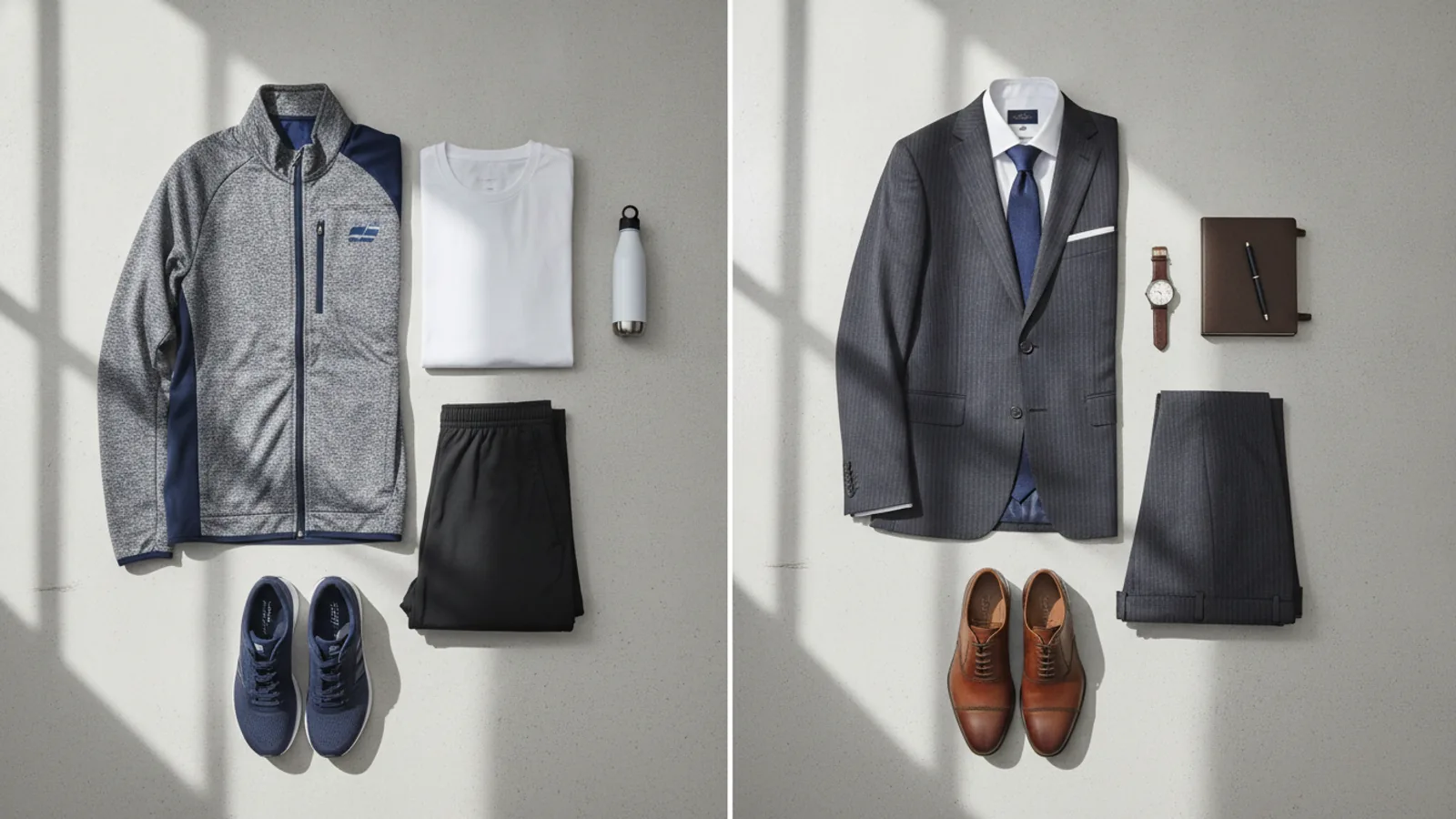
The primary difference lies in their intended formality and construction. A business suit is a coordinated ensemble, typically consisting of a jacket and trousers cut from the same fabric, designed to be worn together. Its purpose is to present a unified, formal, and authoritative image, making it the bedrock of professional and ceremonial dressing.
A sports jacket, by contrast, is a standalone jacket that is intentionally mismatched from the trousers. It's designed to be more versatile, often featuring a wider range of fabrics, textures, and patterns than a typical suit jacket. Its construction tends to be softer, with less internal padding, allowing for greater comfort and a more relaxed silhouette. The sports jacket’s strength lies in its ability to bridge the gap between casual and formal, making it a cornerstone of smart-casual and business-casual wardrobes.
Understanding these core differences – from fabric choice and cut to the expectations of the occasion – is essential when deciding which garment best serves your needs for style, comfort, and appropriate presentation.
Measurement Winners for sports jacket vs business suit
Measurement
Routine Fit (Formality & Occasion Appropriateness)
When considering formality, the business suit is the undisputed champion. Its matching jacket and trousers create a cohesive, polished look that is universally understood as formal attire. For high-stakes business meetings, formal interviews, weddings, or any event where a strict dress code applies, a well-fitted business suit is non-negotiable. It signals respect for the occasion and projects an image of seriousness and professionalism.
The sports jacket, while capable of elevating an outfit, occupies a less formal space. It's ideal for situations where a suit would be overkill but a casual shirt is insufficient – think smart-casual gatherings, creative office environments, dinner dates, or presentations that don't require full corporate regalia. While it offers a refined look, it never achieves the same level of formal gravitas as a business suit.
Measurement
Formula or Feature Winner (Versatility & Styling Options)
Versatility is where the sports jacket truly shines. By its very nature, it's designed to be mixed and matched with various trousers – chinos, jeans, corduroys, or even odd trousers in different colours and patterns. This allows for a vast array of outfit combinations, from a rugged country look with tweed and denim to a sophisticated urban ensemble with wool and tailored chinos. Its diverse fabric options, ranging from linen and cotton to wool and blends, further enhance its adaptability across seasons and style preferences. It can be paired with anything from a t-shirt to a button-down shirt, a polo, or a thin jumper.
The business suit, while elegant, is far more constrained. The jacket and trousers are almost always intended to be worn together. Separating them often diminishes the overall effect, and using a suit jacket as a standalone piece can look out of place without its matching trousers. This makes the suit a powerful but highly specific tool in your wardrobe, excelling in one primary function: formal cohesion.
Measurement
Ease of Use Winner (Comfort & Wearability)
For sheer comfort and ease of wear in 2026, the sports jacket typically has the edge. Modern sports jackets are often constructed with softer, lighter fabrics and less rigid internal structuring (padding, canvas) compared to a traditional business suit jacket. This allows for greater freedom of movement and a more relaxed feel. They can be worn open or closed without feeling restrictive, and their less formal nature often means they are paired with more comfortable shirt options or even knitwear.
Business suits, especially those designed for a traditional formal look, often feature a more structured build with heavier fabrics, more padding, and a tighter fit to maintain a crisp silhouette. While modern suits have improved in comfort, they are still fundamentally designed for a formal presentation that prioritises structure over pure ease. The obligation to keep the jacket and trousers pristine and wrinkle-free also adds a layer of 'mental' discomfort for some users throughout the day.
Measurement
Value Winner (Cost & Investment)
Assessing value involves looking beyond the initial purchase price to the utility and longevity each garment offers. While a good quality business suit can be a significant investment, its utility is often limited to formal occasions. If your lifestyle or profession rarely calls for a full suit, the cost-per-wear can be quite high.
A quality sports jacket, conversely, often represents a better long-term investment for many individuals. Because it can be worn in so many different contexts and paired with numerous items already in your wardrobe, its cost-per-wear tends to be significantly lower. You might invest a similar amount in a sports jacket as a suit, but the jacket will see far more use, effectively distributing its cost over a greater number of outfits and occasions. Furthermore, the ability to buy separates means you can often build a versatile smart-casual wardrobe incrementally.
Measurement
Buyer Confidence Winner (Maintenance & Longevity)
Maintaining a business suit typically requires more dedicated care. Due to the matching nature of the fabric, both the jacket and trousers should ideally be dry cleaned together to prevent colour discrepancies and uneven wear. This can be costly and inconvenient. Suits are also more prone to showing wrinkles and require careful hanging and storage to maintain their sharp appearance.
Sports jackets generally offer more forgiveness in terms of maintenance. While high-quality wool sports jackets still benefit from dry cleaning, many casual options in cotton, linen, or tweed can be spot cleaned or even gently hand washed (depending on the fabric) more easily. Because they are designed to be mismatched, slight variations in the wear or cleaning of the jacket versus the trousers are not an issue. Their often textured fabrics also tend to hide minor wrinkles and blemishes better than the smooth, pristine fabric of a suit.
Measurement
Professional Impact & Image
When it comes to making a definitive professional statement or projecting an image of serious authority, the business suit is unequalled. The uniform appearance of a suit signals structure, discipline, and attention to detail, which are highly valued in many corporate, legal, and governmental settings. It conveys a clear message of professionalism and readiness for formal engagement. In 2026, while dress codes are relaxing, the suit remains the benchmark for formal professional attire.
A sports jacket can project a smart, put-together, and approachable image. It suggests competence and style without the rigid formality of a suit. This makes it excellent for creative industries, networking events, or roles where a friendly yet professional demeanour is preferred over strict corporate gravitas. However, in environments that demand the utmost traditional formality, a sports jacket, no matter how elegant, cannot fully replicate the impact of a full suit.
Choose Sports Jacket If
- Your work environment is business-casual, smart-casual, or flexible.
- You prioritise versatility and want a single garment that can create multiple outfits.
- You frequently attend social gatherings, dinner parties, or casual professional events.
- You value comfort and ease of movement in your everyday attire.
- You want to elevate casual outfits (jeans, chinos) without appearing overly formal.
- You prefer to mix and match different textures and colours in your wardrobe.
- You're building a versatile wardrobe on a budget, where cost-per-wear is a key consideration.
Choose Business Suit If
- Your profession requires formal business attire (e.g., law, finance, executive roles).
- You frequently attend formal events, weddings, or ceremonial occasions.
- You need to make a strong impression of authority, trust, and professionalism.
- You value a cohesive, polished, and traditional appearance.
- Your role involves client-facing interactions where conventional formality is expected.
- You require a complete, ready-to-wear formal ensemble without extensive styling effort.
- You prefer the classic, timeless elegance that only a perfectly matched suit can provide.
Final Verdict: Sports Jacket vs Business Suit
In the evolving landscape of menswear in 2026, both the sports jacket and the business suit hold vital, yet distinct, places in a well-rounded wardrobe. Our analysis, based on thorough product research and market trends, highlights their individual strengths. The **Sports Jacket** emerges as the overall winner due to its superior versatility, comfort, and adaptability to a wider array of modern social and professional settings. It offers exceptional value by allowing for countless outfit combinations, making it a truly flexible investment for most individuals navigating a less rigid dress code landscape.
However, this does not diminish the indispensable role of the **Business Suit**. For occasions demanding absolute formality, unwavering professionalism, and a clear signal of authority, the business suit remains king. Its cohesive presentation and inherent gravitas are unmatched, making it the non-negotiable choice for high-stakes meetings, traditional corporate environments, and formal celebrations. While it lacks the sports jacket's daily wearability, its impact when required is profound.
Ultimately, the "better" choice hinges entirely on your specific needs, lifestyle, and the demands of your environment. For the individual seeking maximum utility and adaptable style, the sports jacket is the clear front-runner. For those whose lives frequently call for the highest standard of formal presentation, the business suit is an essential, foundational garment.
Sports Jacket vs Business Suit: Which Should You Choose? FAQ
Can I wear a business suit jacket as a sports jacket?
While technically possible, it's generally not recommended. Suit jackets are designed to be worn with matching trousers; their fabric, cut, and often more structured padding can look out of place when worn as a standalone item with mismatched trousers. They also tend to be made from smoother, more formal fabrics that don't blend well with casual options like jeans or chinos. It’s better to invest in a dedicated sports jacket for versatility.
What is the main difference in fabric for a sports jacket vs a business suit?
Business suits typically use fine, smooth wools (like worsted wool) in solid colours or subtle patterns (pinstripe, windowpane) to maintain a formal, cohesive look. Sports jackets, conversely, embrace a much wider range of fabrics, including tweed, corduroy, linen, cotton, flannel, and various textured wools (like hopsack or fresco), often in more pronounced patterns and colours. This diversity is key to their versatility and less formal appeal.
Is a sports jacket appropriate for an interview in 2026?
It depends entirely on the industry and role. For interviews in creative fields, tech, or more relaxed industries, a smart sports jacket paired with tailored trousers or chinos and a crisp shirt can be perfectly appropriate and convey a modern, approachable professionalism. For interviews in traditional sectors like finance, law, or high-level corporate roles, a business suit remains the safer and more expected choice to demonstrate seriousness and respect for the company culture.
Can I wear a sports jacket to a wedding?
Again, this depends on the wedding's dress code and formality. For a very casual or rustic wedding, a well-styled sports jacket (perhaps linen for a summer event or tweed for a country setting) might be acceptable. However, for most traditional weddings, especially those with "smart," "cocktail," or "formal" dress codes, a business suit or even a tuxedo (for black tie) would be more appropriate. Always check the invitation for guidance.
How many sports jackets should I own compared to suits?
For most men in 2026, a highly versatile wardrobe would likely benefit from more sports jackets than business suits. You might aim for 2-3 versatile sports jackets (e.g., a neutral wool, a textured cotton/linen, and perhaps a casual tweed) to cover various seasons and styles. For suits, 1-2 well-fitting business suits in classic colours (navy, charcoal) might suffice for occasional formal needs, unless your profession demands daily suit wear.